


|
|
|---|


Tuesday, July 28, 2009
A great article in the FT Weekend highlighting rising consumer debt defaults in Europe.
With all the optimism over green shoots and stock market rallies, many remain worried that the global economy will face a second-wave assault, from credit cards or commercial mortgages or some unforeseen feedback that plunges the real economy back down, irrespective of asset prices.
I am interested in the negative feedback mechanisms that could undermine a return to significant growth over the coming years. The consensus is that the global economy will rebound in 2010, but to what level? And how will factors like the lack of financial aid to college students, or higher US savings rate, shape this recovery and re-order developed economies?
Sunday, July 26, 2009
-In competing NYT op-eds, Nouriel Roubini and Anna Schwartz lay out the arguments in favor of (Roubini) and against (Schwartz) a Bernanke re-appointment.
-Funny difference a year (see: plunging output and investment) makes: foreign oil companies are suddenly welcome again in Russia.
-Balance of payments pressures + growing investor risk appetite = emerging market debt bonanza.
-While Russia's ticking demographic timebomb made the news this past weekend, Shanghai was hard at work fighting its own.
-Zsolt Darvas makes the argument for easing euro-area entry criteria.
Thursday, May 28, 2009
No explanation needed:
The U.S. economy will enter “hyperinflation” approaching the levels in Zimbabwe because the Federal Reserve will be reluctant to raise interest rates, investor Marc Faber said.
Prices may increase at rates “close to” Zimbabwe’s gains, Faber said in an interview with Bloomberg Television in Hong Kong. Zimbabwe’s inflation rate reached 231 million percent in July, the last annual rate published by the statistics office.
“I am 100 percent sure that the U.S. will go into hyperinflation,” Faber said. “The problem with government debt growing so much is that when the time will come and the Fed should increase interest rates, they will be very reluctant to do so and so inflation will start to accelerate.”
Really, Faber? "Close" to Zimbabwe's gains? Really?
Wednesday, May 13, 2009
Following a not-so-brief sabbatical from these fine pages...your Wednesday quick hits and pink picks:
-While the financial markets are cautiously optimistic the US economy may be stabilizing, some prominent figures are still anticipating Armageddon: John Taylor, of Taylor Rule fame, thinks the Fed is dangerously loose with its monetary policy and has "caused, prolonged, and worsened" the financial crisis. He challenges the Fed's assurances that it can quickly shrink its balance sheet to prevent an inflationary tsunami on the upswing. In a potent dose of IPE, he points to the likely, and severe, political constraints such steps would face. If Taylor is correct, the Fed has little room left to stimulate credit/growth before a rapid, and sharp, tightening of monetary policy is necessary. A second alarm has been sounded by David Walker, formerly director of the Government Accountability Office, who warns the US' triple-A credit rating is at serious risk. He identifies two primary risk factors: health care reform and poor post-crisis fiscal constraints. Walker acknowledges that health care reform is critical to correcting the country's fiscal imbalance and driving down the cost to individuals, but contends that we should focus on reforming the massively unfunded liabilities we are already living with, namely Medicare. Second, like Taylor he worries that political constraints will limit the political will to impose fiscal discipline after the flood. There's also that tricky little issue of tax increases.
-In an admittedly lightweight piece for Vanity Fair.com, Matt Pressman identifies four reasons why Newsweek and Time will never be The Economist. The US newsweeklies are looking to the emulate the print media's shining star, a sentiment so widely held in the industry that Pressman likens it to the ever-present "10 secrets to perfect abs." While the analysis could be much better, the article does identify a critical gap in the US media landscape, intelligent international affairs reporting, and in a way challenges the print media's death knell. There are publications, like The Economist and FT, both of which have seen US circulation numbers steadily rising over the past decade, who are still growing amidst print's great decline. While Pressman is correct that "do as The Economist does" has become an industry cliche rarely realized in circulation or quality, he is wrong to suggest that The Economist's reporting/analysis/"snob appeal" cannot be emulated. Much of the US media talks to Americans like they are their worst stereotype: isolated, ignorant, superficial and uninterested in the world around them. Newsweek and Time should thus be applauded, not mocked, in their efforts to emulate The Economist, whether ultimately viable or not. A final point: is it a coincidence that thriving print publications are seemingly all British?
-It is once again the CIA v. Congress, a battle seemingly waged once every other decade. Isn't blame/failure in such instances always systemic? And is this stunning reversal related?
-Over the past year, we have tried to highlight some of less visible victims of the credit crunch, be it sport or contemporary art. Yachts and independent films could be added to list, as this year's Cannes Film Festival kicks off under a cloud of financial uncertainty.
-The Finnish government is merging the country's top three universities to form a single, new institution of higher education: Aalto University. The new school will endeavor to approach innovation from a multidisciplinary track. Seed Magazine examines its vision.
Tuesday, April 14, 2009
Poland looks set to become the second country, after Mexico, to access the IMF's Flexible Credit Line, a facility designed to offer stable countries access to contingency credit with few strings attached.
Polish Finance Minister Jacek Rostowski was careful to point out that the credit line would be treated as a "supplementary reserve" for the central bank, rather than "emergency funding."
Thursday, March 12, 2009
Staying on today's theme, the number of Russians making Forbes' 2009 list of the world's richest people fell nearly 66% from the year before. It was bad to be an oligarch in 2008 (ok not really, just worse than 2007).
Friday, March 6, 2009
Now that the Bank of England has followed the Fed and embarked on "quantitative easing", readers may be asking themselves: what exactly does that mean?
Via FT Alphaville, the Telegraph provides a handy overview in "Printing money: an easy guide to quantitative easing."
UPDATE: The FT had a handy graphic/demonstration as well last month. You can find it here.
Thursday, February 19, 2009
-What Commanding Heights was to incoming IPE students at LSE in 07-08, Niall Ferguson's The Ascent of Money will be to next year's class: your year in a convenient one-hour program.
-Succumbing to financial reality, Russian lawmakers have cut the budget for the Sochi Winter Games by 15%.
-Proving that even cheesy continental television contests aren't absent geopolitical tensions, the Georgian entry for this year's Eurovision final is called "We Don't Wanna Put In", a song that mocks Russia and its Prime Minister Vladimir Putin (get it, Put In=Putin). This is clearly an irresponsible provocation; expect Russian troops in Tbilisi by Sunday!
-Two interesting reports on the intelligence front. First, The Telegraph is reporting that Israel has been conducting a covert war against Iran, "using hitmen, sabotage, front companies and double agents to disrupt the regime's illicit weapons project." Concluding that a direct military strike is too risky/ineffective/unsanctioned by the US, the Israeli strategy seeks to, according to a former US intelligence officer, "delay, delay, delay until you can come up with some other solution or approach."
Second, the cross section of international terrorism and technology is widely appreciated. Al Qaeda's use of the internet and certain media outlets for propaganda and fundraising is highly developed, as is the use of advanced military technology in attacking terrorist networks (for example, unmanned drones in Pakistan/Afghanistan). But the US may be more than a little unhappy with one of the world's most largest technology firms: Google. The US and Pakistani governments have long denied that the US was conducting military operations from Pakistani soil. Well, apparently a simple search on Google Earth blew that denial out of the water; the Times of London obtained satellite images clearly showing predator drones at Shamsi airbase in Baluchistan as early as 2006.
Sunday, February 15, 2009
Politique
-G7 finance ministers meet in Rome following the passage of an $787bn US stimulus package. US Treasury Secretary Geithner received a not-so welcome reception at the meeting, with some ministers critical of the US deficit and "Buy America(n)" provision present in the final bill. While the meeting provided window treatment to the tensions over protectionism, it is clear that a substantive lack of coordination and consensus is setting the global economy up for a period of tense economic relations. G7 communique text here.
-The Israeli election ended in a stalemate as Kadima won a shock 1-seat minority victory over Likud. The insurgent candidacy of far-right party Yisrael Beitenu and its leader Lieberman shook the political establishment, banishing Labour to the political wilderness and winning the key to an eventual coalition government.
-Venezuelans voted again on abolishing term limits. Chavez has raised tensions in the run up to this vote by denouncing an opposition and US-led "coup" plot.
-For the first time, Pakistan officially acknowledged that "some part of the conspiracy" against Mumbai was carried out on its soil.
Economia
-US Treasury secretary Geithner unveiled an "outline" of the Obama administration's financial system rescue plan. The heavy on intentions, light on details presentation was immediately rebuffed by markets, commentators and policymakers begging for more clarity and substance.
-Karl-Theodore zu Guttenberg assumed the economic portfolio in Angela Merkel's coalition. The move comes less than a week after it was announced that German industrial output fell in December by its largest margin since unification.
-In testimony before Congress, US director of national intelligence Dennis C. Blair said that the global economic crisis was the most urgent threat to US, and global, security. The global political instability, economic uncertainty and diminished US authority stemming from the crisis surpassed the threats posed by terrorism and nuclear proliferation.
The Rest
-In the FA Cup, Everton beat Villa, ManU over Derby, and Swansea forced a replay against Fulham at the Cottage. In other Prem news, Big Phil went bye bye. In Serie A, Becks looked set to return to L.A. after the MLS imposed Friday deadline (or tactic?) passed without a deal. In Spain, Raul broke the all-time goals record at Real Madrid.
-In the biggest study of its kind, researchers found that regular multivitamin use did little to prevent cancer or heart disease in older women.
-Walking down Amsterdam Avenue in Manhattan yesterday, my wife and I stumbled upon a disheveled, mad scientist looking Malcolm Gladwell. As we approached the best-selling author, he very clearly slowed down to walk parallel to us, awkwardly incapable of disguising the fact that he was eavesdropping on our animated, but admittedly unremarkable, conversation. I am convinced that we are now the subject of his next book, Caring for the Elderly, and demand royalties.
Thursday, February 12, 2009
-The Bolivarian dictator who cried "coup" is at it again. Venezuelans go to the polls on Sunday in Chavez's second try at a constitutional amendment removing term limits.
-The Project for Excellence in Journalism profiles "The New Washington Press Corps". It finds that while the "traditional" media's footprint in the US capital has shrunk dramatically, niche media (small and targeted) and foreign correspondents have increased their presence. The Washington bureau of Mother Jones is now roughly the same size as Time's, while Al Jazeera now rivals CBS.
-Dubai is fastly becoming one of the biggest casualties of the credit crunch. The real estate market has collapsed and foreign workers (approx. 90% of the emirate's labor force) are being laid off en masse. The NYT looks at one aspect of the deteriorating economic situation: foreign professionals fleeing the debt and luxury vehicles they accumulated during the boom.
-Eduardo came on for Croatia last night in a friendly v. Romania, and Arsenal hearts were, if only for a moment, lifted.
Sunday, January 4, 2009
Politique
-As the world limped into the new year, IPE Journal looked back at the defining political stories of 2008.
-Israel's Gaza operation entered its second week. A ground invasion is now underway to topple the Hamas regime and prevent further rocket attacks on Israel. The UN Security Council failed to reach a consensus position this weekend, despite an humanitarian situation characterized as "desperate."
-Czech President Vaclav Klaus assumed the rotating EU Presidency this week. After a widely praised and robust Sarkozy presidency, Brussels watchers are anxious that the "prickly" Klaus will undermine EU consensus on the financial crisis, climate change and, well, the EU itself.
-The Chinese government moved to silence the signatories of Charter 08, a "wide-ranging blueprint for peaceful political, legal and economic reform in China." The crackdown reflects the deep anxiety carried by the Chinese leadership into 2009.
Economia
-Entering 2009 with much economic and financial uncertainty, IPE Journal looked back at the economic stories of 2008.
-Another price dispute between Russia and Ukraine resulted in the suspension of natural gas deliveries to Ukraine, with reports of growing shortages from Turkey to the Czech Republic. Both Moscow and Kiev are courting European support for their position in the dispute.
-Sterling neared Euro parity for the first time, a milestone that might spark a much deeper sterling sell-off.
The Rest
-Now more than ever, we need distractions. IPE Journal looked back at the cultural, sporting and down right random things that captured our attention in 2008.
-In the FA Cup, Arsenal go forward on a Van Persie brace, while Man City crashes out in spectacular fashion. Notable 4th round ties: ManU v. Spurs, Liverpool v. Everton.
-40 drunken passengers run "riot" on Cuba bound flight from Gatwick. "Drunk", "Gatwick" and "riot" are three words I am not surprised to find in the same sentence.
-The Obama's arrived in Washington...let the parties, galas and Republican exodus begin.
Tuesday, December 30, 2008
IPE Journal looks at the economic events that defined our socio-political landscape in 2008, the year of the subprime.
- In The Beginning there was Northern Rock - nationalized in February by the UK government following a good old fashioned bank run. Following heavy losses in the subprime mortgage market, Bear Stearns was next to go: in March, the once-proud investment bank was sold to JP Morgan for pittance. In July, IndyMac Bank went into receivership.
- September Madness. Over the course of a few short weeks, the magnitude of the crisis hit home (so to speak) as financial giants fell like so many martini-and-oyster fuelled dominos. The highlights:
- Freddie and Fannie are taken over by the US federal government
- Merrill Lynch is sold to Bank of America
- The Federal Reserve offered loans to AIG and took an 80% share in the company
- Washington Mutual is seized by the FDIC
- Morgan Stanley and Goldman Sachs become traditional bank holding companies, bringing the era of independent investment banks to a temporary close.
- And Lehman Brothers - in what now appears to have been a hugely significant decision, Lehman Brothers was allowed to fall into bankruptcy and the credit crunch prompty shifted into a higher gear.
- Keynes returns from the wilderness. The collapse in consumer demand has led governments across the globe to initiate fiscal stimulus programs. The sheer rapidity of this about-face in policymaking is breathtaking. We've come to expect such measures from the likes of France and Sweden, but from the UK, US and (gasp!) Germany? Keynes was wrong on many counts and his proclaimed followers even more so, but Keynes' insights on the role of government during economic downturns have gained a new lease on life. For better or worse, the impact of government spending programs and fiscal guarantees will be a defining feature of 2009.
- Price of oil $140 -> $40. A May 5th Goldman Sachs report predicted oil would break $200 within 24 months. Ok, still possible, but six months later the commodity bubble had burst in spectacular fashion and oil was trading under $40 a barrel. The explanations for the remarkable run up in commodity prices of recent years are manifold: historic emerging market growth, global demand, dollar weakness, financial speculation, etc. The price apex was as much about psychology as it was fundamentals, what Donald Rumsfeld would eloquently call the realization of "known unknowns". The "peak oil" moment came in the minds of consumers, politicians and traders across the world, only to be swiftly disregarded as global demand collapsed. Even repeated OPEC production cuts couldn't halt the slide into 2009. Commodity countries from Russia to Mexico are feeling the pressure, with devaluations and political instability on the way.
- Dollar down, up...down? It is awkward to speak of benificiaries of the financial crisis, but the US dollar was exactly that in 2008. By the end of 2007, there was a growing debate over whether the dollar had entered into a sustained relative decline vis-a-vis the Euro, with many concluding the common currency would soon eclipse the greenback's status as primary global reserve currency. The credit crunch had undermined confidence in the US financial system, and hot money ran wild through commodity currencies and emerging markets. But then financial crisis accelerated, and the commodity bubble burst, and investors sprinted to the safety of US dollar. It hit multiyear highs against sterling, the Euro, and a slew of emerging market currencies. Looking ahead, the outlook for dollar appears decidely weaker in 2009. The massive spending plans of Barack Obama and easy money Fed will weigh on the gains of the past year, especially vis-a-vis the Euro and Yen. But the dollar will likely retain its strenght v. emerging market currencies and sterling, as investors continue to find security in the greenback and the UK falls into the abyss.
Notable economic events which could have shaped the course of our year [Update: for the better], but failed: WTO talks & the G20 meeting in November.
***Co-written by Rory Doyle
IPE Journal looks back at the political events, people and trends that defined our world in 2008.
- The worst financial crisis since the Great Depression sets in motion a paradigm shift in global power and authority. The state reoccupied the commanding heights of the global economy through stimulus packages, banking nationalizations and automotive bailouts. The IMF regained relevance, and political fortunes were turned in response to the crisis. The G20 replaced the G8 (but for how long?), and the WTO sadly threw in the towel for 2008.
- Barack Obama was elected the 44th President of the United States in one of the largest electoral landslides in decades. He is the first African-American elected to the highest office. He quickly established a "team of rivals" cabinet, bringing together the best, brightest and (slightly) bipartisan to implement his foreign policy and economic agenda. This agenda will likely be defined by what has been called a "21st century New Deal".
- Russia invaded and briefly occupied much of Georgia. The conflict reasserted Russian influence in its "near abroad", exposed EU divisions over Russian relations and raised tensions over NATO expansion and US missile defense in Eastern Europe. It also exposed the real power dynamics in Russia, with Putin effectively orchestrating, commanding and negotiating throughout the conflict. However, by the end of 2008, the financial crisis would for the first time raise questions over Putin's rule as the country was forced to devalue the rouble and ripples of unrest began to sprout up.
- Parts of Africa continue their descent into hell. Kenya erupts, Somalia struggles, and Darfur is a humanitarian disaster. Fighting has resumed in the DRC with Rwandan support, and Mugabe has maintained his iron grip on power, squeezing Zimbabwe dry in the process. Mbeki left office in South Africa, paving the way for Zuma in 2009. The world now looks to Ghana in the final days of 2008, and hopes for a victory for African democracy.
- The Treaty of Lisbon, an attempt to streamline and bolster the EU, is rejected by Irish voters, temporarily killing the process. While certainly a setback for further European integration, Europhiles promise to continue holding referendums until the voters get it "right." A December summit laid out the blueprint/compromise for Lisbon's revival in 2009, and, for possibly the first time in EU history, ended with universal praise of a French president.
- Attacks in Mumbai: as of yet, not a defining geopolitical event since Pakistan and India worked hard to prevent the situation from escalating. Nevertheless, this is a potential touching-off point for the nuclear rivals in 2009. It also might (by design??) divert Pakistani attention away from fighting terrorism in the northwest tribal areas, and reignite violence in Kashmir. The implications of Mumbai are vast, and potentially destabilizing for the entire world.
- Israel, in response to repeated rocket attacks, and in advance of national elections, pounds Hamas and infrastructure in Gaza. The year's final week produced one its most explosive events, as the fighting in Gaza risks wider political instability and a humanitarian crisis in the territory. Many analysts believe that Israel's overwhelming aerial assault is an attempt to dictate a new truce with Hamas, but its military establishment is signalling that the shock and awe may be only the first phase in a wider operation aimed at removing Hamas from power.
***Co-written by Dave Hart
Tuesday, December 16, 2008
I have been bullish on the dollar for some time (here and here and here).
As of 3:15pm, I am a dollar bear.
In a unanimous vote, the US Federal Reserve slashed the Fed funds rate from 1% to a range of 0.00-0.25% (apparently they can set a range, something I was admittedly unfamiliar with). This is the lowest range in Fed history, and the statement made it clear that rates would remain near zero for "some time" to come (a "commitment" until the economy reverses). The Fed also indicated that it will take unorthodox measures to combat the deepening recession, throwing out convention and undertaking broad quantitative easing through increasing reserves and expanding its balance sheet. I also believe it signaled a fear that we have entered a liquidity trap (as Krugman explains it, "that awkward condition in which monetary policy loses its grip because the nominal interest rate is essentially zero, in which the quantity of money becomes irrelevant because money and bonds are essentially perfect substitutes"). The Fed will likely purchase mortgage debt to influence their yields (as opposed to directly setting target rates) and T-bills.
If you believe the likes of Keynes, Friedman and Bernanke, the Fed has just prevented a depression.
How you ask? One perspective would argue that the great depression was deepened by the reluctance of monetary policymakers to bring rates to zero. An official attachment to the prevailing gold standard orthodoxy is a common explanation in IPE for this hesitation (see Eichengreen). Bernanke and co. have just squashed that fear (but an argument might be made that it is too much too late, that Bernanke went against his own instinct and balked). A second perspective thinks the effect of the interest rate tool is overstated. It instead focuses on the lack of liquidity provision as the determinant factor in plunging the world into depression. The argument is that by directly expanding the money base the value attached to cash and other short term securities falls to a level at which investors will move into higher yielding assets and consumers/banks will spend again. Well, Bernanke and co. has that base covered as well. Start priming the printing presses, cause we're about to see a whole lot of dollars. What, then, if we are in a liquidity trap, and neither policy option is sufficient alone or in combo? That's where the creativity comes in. It won't be easy, but the Fed is finally saying to the world, "We will do anything it takes to turn this thing around".
In my humble opinion, we should all be thankful that the real Benjamin Shalom Bernanke has finally shown up.
A funny side note- the folks at Fast Money on CNBC (a show I personally find obnoxious, but am sick in bed and dealing with it) recognized that Ben Bernanke's nickname is no longer appropriate. Bernanke is known as "Helicopter Ben". This stems from his scholarship on the depression, and his argument that monetary policymakers should figuratively dump money from a helicopter if necessary to fight deflation (derived from Milton Friedman's 'helicopter money' concept). The Fast Money crew noted that the Fed's actions have gone well beyond a "dump", and that a "Carpet bombing Ben" moniker would be more fitting.
Sunday, December 14, 2008
Great quote from Congressman Barney Frank on 60 Minutes this evening. Frank, responding to the argument that an auto bailout is antithetical to America's Darwinian capitalism, said:
"Darwin was a great biologist, but I don't think he was much of an economist".
Fun facts: Frank doesn't own a computer, and composes letters in his office by Dictaphone. Remember the Dictaphone boys and girls? Yeah, me neither.
Politique
-A cholera outbreak in Zimbabwe worsens as Mugabe stays silent, then denies, then blames the Brits. Meanwhile, Ghana brings some hope to African democracy.
-EU leaders burned the midnight oil to reach consensus on key climate change and fiscal stimulus proposals. Deep divisions remained over the extent of coordinated fiscal measures at the national level. Concessions made to Ireland in return for second Lisbon Treaty referendum, but leaders are careful not to instigate a backlash in the UK.
-US auto bailout dies in the Senate, as Bush is forced to reconsider the dedication of TARP money to the carmakers.
Economia
-Ecuador defaults, as President Correa brands debt "illegitimate" and foreign creditors "monsters".
-How low can Treasuries yields go?
-The WTO admits defeat for 2008.
The Rest
-In the Prem, Arsenal stumble out of the title race, Liverpool and Chelsea underwhelm, and Villa break the top 4.
-Fresh off their hostile takeover of Citi, Somali pirates express interest a certain vacant US Senate seat.
-US film industry awards season kicks off with Golden Globes nominations, New York and L.A. film critics awards.
-Bush gets two "steps" closer to retirement:
Wednesday, December 10, 2008
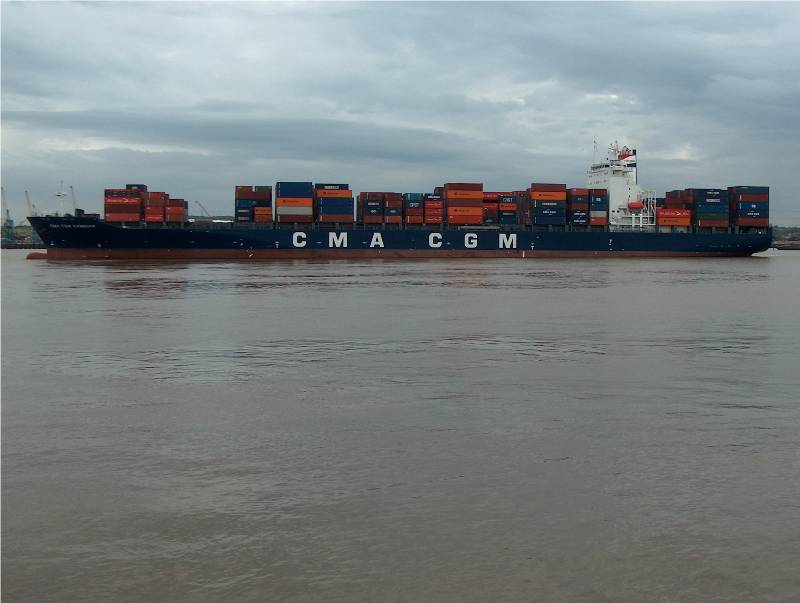
I am reminded of a conversation I had with a good friend of mine as we sat along the Thames watching tugboats push heavy crates of cargo up and down the river. He mentioned that he really enjoyed watching this happen because it reminded him that this is what trade ultimately comes down to: moving boxes from one place to another. Internationl transactions now involve complex derivatives, currency hedges and whatnot, but at the end of the day 77% of global trade is the result of ships moving boxes from one place to another.
This is why it should be particularly worrying that the credit crunch has moved from threatening the jobs of investment bankers to threatening the jobs of shipping and dock workers. The Baltic Dry Index, which measures freight rates for bulk goods, has dropped 96% since May - an incredible display of volatility. Granted, it appears to be a pretty volatile index to begin with and we're currently not far off from pre-2003 levels. But export-oriented economies are hurting badly, particularly the East Asian tigers that are still licking wounds from their own financial crisis a decade ago.
In addition to the costs felt by workers and firms, new ship-building orders are being cancelled regularly. That will dampen the ability of shipping companies to meet demand when it resumes again - clearly an unhappy prospect.
However, some possible good news yesterday coming from the WSJ blog: a recent bump in the Index. FT Alphaville notes that this could be a side-effect of optimism about Obama's expected stimulus package and speculates about some other industries that may benefit as well. But with the medium-term prospects of shipping being what they are, can we expect this uptick to last?
Monday, December 8, 2008
-John Thain wants his 2008 bonus, reportedly $10m. Two ways to look at this: 1) his social and political thermometers are broken, or 2) he deserves it. Despite all of his misleading statements on the health of Merrill Lynch and role in its eventual acquisition by Bank of America, he did secure the sale of the firm at $28 a share. Remember what Bear went for? My take: I recognize point 2, but agree with point 1. He's insane for asking, and his compensation committee would be crazier to approve. UPDATE: Apparently, someone told him this whole bonus demand was a bad idea, because he no longer wants it.
-The FT has an interesting article on today's elections in Quebec. The economy trumps sovereignty, a good sign for Liberals.
-The Pulitzer Prizes have expanded to cover online only publications. IPE Journal submits itself for consideration.
-Petroleum Intelligence Weekly has released its influential annual rankings of the world's top oil companies. The report highlights the increasingly marginalized position of the traditional private oil majors, and growing global market dominance of majority state-owned companies. This trend towards nationalization and state control of increasingly scarce resources has a number of powerful implications.
Saturday, December 6, 2008
Politique
-US President-elect Barack Obama unveils details of his "21st century New Deal". The Economic Recovery Plan is preliminarily based on 5 pillars: energy, roads and bridges, schools, broadband, and electronic medical records. Many, including prominent members of his own party, are becoming increasingly frustrated with his "there is only one president at a time" line, as the sitting President appears to have checked out while Rome burns.
-The terrorist attacks on Mumbai end, the Indian investigation expands, and at least 29 people die from a car bomb in the Pakistani city of Peshwara. Blame for the attacks has focused on Pakistan-based Lashkar-e-Taiba (the likely perpetrators), the Indian government (early warnings, poor response, failure to hold Pakistan accountable), and the Pakistani regime (failure/inability to address sources of terrorism and militancy within its borders).
-A deliciously intriguing affair in the British House of Commons has ignited a fierce debate over Parliamentary independence, opposition politics, and police powers. Meanwhile, Canada has its own legislative controversy to deal with (find Dave's take here).
Economia
-The US learned it has been in recession since December 2007 (something everyone but this guy has been well aware of) and lost 533,000 jobs in November, the largest jobs decline in 34 years.
-Angela Merkel grew increasingly isolated in Europe as French President Sarkozy unveiled a €26bn stimulus package. UK Prime Minister Brown and Sarkozy will meet in London on Monday to renew their call for a coordinated European stimulus.
-An historic week in European central banking: BoE cuts 100 basis points to 2.0% (lowest level since 1951), ECB goes with 75 basis points to 2.5% (its largest single cut ever), and Sweden slashes a record 175 basis points to 2.0%.
The Rest
-In the Prem: Arsenal continue form following famous win at Stamford Bridge, Liverpool stay top, and ManU and Spurs on track for Carling Cup final. In Europe: Cristiano Ronaldo wins Ballon d'Or, reveals he was "an inch away" from being a Gunner in 2003.
-This week in Japanese innovation: omelets with the Motoman SDA10.
-"Experienced bandits" steal €85mn in luxury jewels from Harry Winston store in Paris. According to Reuters, the heist occurred almost a year to the day of a similar $16mn robbery at the store.


