


|
|
|---|


Tuesday, January 5, 2010
In our year in review of economics, I deliberately left out any discussion of trends in world trade for 2009. This was because, frankly, I couldn't find any information to use. Luckily, there is Mike Mandel to the rescue (via Felix Salmon):
So the IMF figures we're back to where we were in 2003. Great.
Tuesday, December 22, 2009
Our friend Patrick Thomas, the UK Embassy in Washington's policy advisor for trade and agriculture, and his colleague Tom Barry, first secretary, economics at the Embassy, have contributed a great guest post to the Wall Street Journal's Real Time Economics blog entitled 'Santa Claus's Trade Infractions.'
According to little Johnny (aged four and three quarters), Santa has a lot of explaining to do before the WTO.
Check it out!
Wednesday, November 18, 2009
Transparency International has released its Corruption Perceptions Index 2009 (CPI), which measures the perceived level of public sector corruption in 180 countries around the world. It has become something of a gold standard for measuring corruption, as it is both independent, and reflects the sentiments of actual economic and political actors.
Huguette Labelle, Chair, introduces this year's CPI below:
Thursday, November 5, 2009
“The Americans get the toys, the Chinese get the Treasuries and we get screwed.”
That is a quote from an EU official to Alan Beattie in his November 2nd article in the FT entitled, 'Renminbi at heart of trade imbalances.' The sentiment echoes my observation that the Europeans are turning out to be the big losers in the US-China currency dance.
The old adage that the USD is 'our currency, but your problem' is as relevant as ever, at least to Europe.
Tuesday, July 21, 2009
This morning's readables, to be enjoyed with coffee (or your stimulant of choice):
- Fred Bergsten urges Obama to be bold on trade in an op-ed for the FT.
- What went wrong with economics? With reponses being posted here, here annnnd here.
- Not-so-well-endowed: Harvard is facing financial troubles. Is Larry Summers partly to blame?
- Rumours that two of the most awful places on the planet are teaming up.
- Dan Drezner discusses Iran, rap music and international relations theory
Sunday, May 17, 2009
In a Sunday interview with The Guardian, British Foreign Secretary David Miliband acknowledges China's unspoken assumption of great power status this past year, pointing to the G20 London meeting as a defining moment in China's rise. He goes on to offer the following 'joke':
'After 1989, capitalism saved China. After 2009, China saved capitalism.'
Monday, April 13, 2009
-According to newly released figures, China's foreign reserves plunged a record $32.6bn in January, and a further $1.4bn in February. This is partly attributed to heavy selling of US T-bills and other foreign bonds, capital flight and falling export revenue. Before we get too worried about a loss of Chinese confidence in the dollar, or too excited about the unwinding of macroeconomic imbalances, these same reserves bounced back to the tune of $41.7bn in March.
-China has turned it's increasingly assertive foreign policy to South-East Asia this week with the announcement of a $10bn investment fund for Asean countries. It will also provide $15bn in credit over the next three to five years.
-Thailand's state of emergency is weighing heavily on the baht, while ratings agencies have warned of downgrades to the country's credit rating.
-The UN Security Council has agreed on a statement condemning North Korea's missile launch and calling for the tightening of existing sanctions.
Sunday, April 12, 2009
Politique
-Japanese Prime Minister Taro Aso announced a new, Y15,400bn fiscal stimulus package.
-All criminal charges against Jacob Zuma are dropped, clearing the way for the ANC head's election to the presidency later this month.
-An East Asia summit is cancelled as Thailand stands on the brink of "revolution." Elsewhere, tens of thousands of protesters rallied in the Georgian capital of Tbilisi for Saakashvili's resignation.
-An earthquake killed at least 250 people in Italy, leaving near 20,000 others homeless.
Economia
-Wells Fargo stunned Wall Street with a profitable Q1 2009, contributing to the fifth straight weekly gains for US stocks.
-The FT ran an interesting article on Japanese bank Nomura's move towards more "western-style" contracts for employees.
-Underlining the collapse of trade in Asia, Singapore's GDP "probably" shrank for the fourth straight quarter, the deepest recession in the country's history.
The Rest
-In Europe, Barca looked unbeatable in their thrashing of Bayern Munich, a sublime Adebayor goal put Arsenal in the driver's seat and Chealsea stunned Liverpool at Anfield.
-A Reuters piece asks, "Is America's love affair with the 'exurbs' over?"
-Art prices fell 35% in Q1 2009.
Thursday, April 2, 2009
According to the FT, the final G20 communique makes the easy choices, and avoids almost all the tough ones (unless you ever really considered tax havens a sticking point). Gordon Brown is currently holding his closing press conference, putting a brave face on the meeting. Here are the preliminary details, keeping in mind that I have not read the communique yet:
-$750bn increased funding for the IMF ($500bn in new loans, $250bn creation of a new special drawing rights facility)
-$250bn in trade finance
-OECD to publish list of tax havens to "name and shame"
-Hedge funds will come under the direct supervision of national regulators
So, where do we stand? Well, the Europeans seem to be the big winners. The EU got its tax havens/hedge fund regulation, increased IMF funding and international trade support. We have no "grand bargain" on global financial regulation, but that was always as unlikely as a stimulus commitment. Sarko's showmanship seems to have worked; another successful summit for the great Summit Sarko.
I must say that the US/UK largely failed to obtain its priorities, especially a global commitment on fiscal stimulus. In his closing presser, Brown boasted of historic interest rate cuts and a global fiscal stimulus. But this was a classic summit tactic of framing actions already taken by national governments in the context of the summit consensus; when, in fact, no such consensus exists moving forward.
We will have much more to say about the G20 communique once we dive into the details. But initially, the agreement does seem pretty unremarkable, and the global fault lines appear as deep as they were heading in.
Wednesday, April 1, 2009
Other, traditional media outlets will provide you with more comprehensive coverage of the G20 meeting in London. While a lot of bloggers would have you believe otherwise, newspapers still offer the best access, authority and overall coverage of events like the G20. I have no illusions to the contrary. So over the next few days, I'll instead aim to provide our readers with some of the more interesting, hilarious and overlooked anecdotes of this important meeting.
-It is fascinating to watch the public relations machines in overdrive ahead of the meeting: downplay the differences (US, UK), demand your red lines are met 'or else' (France, Germany), the other side just doesn't get it (Japan), mumble about the dollar to avoid taking a vocal stance on the most controversial issues (Russia, China), sit back and avoid the collateral damage (everyone else). Summits are always about image/message management, and unfortunately only rarely about radical or decisive action. As a colleague noted to me this week, 90% of a multilateral summit is completed before the principals even sit down at the table (sherpas do the heavy lifting in advance of the meeting itself). Each leader knows this, and thus positions him/herself accordingly ahead of the final communique, speaking directly to their domestic audience. The fact that such deep divisions are so publicly aired ahead of this particular summit suggests that there will be few major breakthroughs in London. Regardless of the post-summit rhetoric, increasing the regulation of hedge funds, while important, isn't going to solve any of our most immediate problems. Increasing IMF funding would occur with or without this meeting.
-The City of London was fighting back!! ahead of the protests, although I wonder how many are actually hanging around Bank and Moorgate after work this evening.
-Dan Drezner's April Fool's Day joke would be a lot funnier if it wasn't so, sadly, improbable.
-For two leaders with a chilly relationship, Merkel and Sarko have forged quite the formidable alliance at this summit. This front was built on tax havens in Europe and seems to be carrying through quite strongly to global financial regulation.
-Sarkozy, in fact, claimed today that China was the main obstacle to a deal on global regulation, blocking a provision on...wait for it...tax havens (which, by relation, is an issue directly connected to hedge fund regulation). Who would have guessed that tiny alpine kingdoms, English Channel rock formations and tropical islands would collectively sink a summit? And does it not seem a little too convenient for China to be cast as the problem when such deep divisions exist between the US/UK and France/Germany?
Tuesday, March 10, 2009
In a piece on Vox EU, Hadi Soesastro argues that East Asian countries should seize the opportunity afforded by the G20 and integrate their strategic interests and influence into the emerging post-crisis governance paradigm.
The crisis has created an opportunity for new players to bring their plights, interests, and aspirations to bear towards more inclusive global efforts to resolve it.
He argues that East Asia's inward focus over the past decade (with the big exception of China) has limited the region's collective influence and ability to project its strategic interests onto the global economic governance structure. Soesastro points specifically to the creation of a regional monetary fund, borne out of the collective sense of injustice at the hands of the IMF following the East Asian financial crisis.
He also believes, more broadly, that the focus should not be on the reform of existing international institutions. Global governance would instead be more effective if based on regional arrangements that coalesce the interests of developed, emerging and least developed economies within a geographic area. He points to efforts already underway within Latin America and the CIS to develop regional agendas for the G20 forum.
Finally, he identifies the G20 as a vehicle for China to increase its participation in global economic governance:
East Asia’s strategic participation in the G20 provides a framework for China to play an increased role – as a key member of the regional community – in the recovery of the global economy and in shaping global economic governance. In the Chinese language, the word “crisis” is made up aptly of the characters for “danger” and “opportunity”.
Soesastro's rallying cry for East Asia reflects a growing consensus that the G8 has become irrelevant and the post-crisis economic governance paradigm must be inclusive of a broader range of stakeholders, particularly those whose economic power far outweighs their political representation under the current global regime. If macroeconomic imbalances have played a central role in the crisis, the representatives of one half of that equation (i.e. Asian savings, which I know is a horrible oversimplification) should undoubtedly play as large a role in resolving the crisis as any party from the other side of the ledger. Further, trade is vital to East Asian economic growth and integration. Having a vocal advocate for open trade at the negotiating table, at a time when many of the major western countries are swinging towards protectionism, is of paramount importance to preserving the free trade consensus.
While I am skeptical of the ease with which Soesastro envisions a regional convergence of interests on issues like trade and investment (will China's interests always converge so neatly with Japan's?), he nonetheless highlights the enormous opportunity previously marginalized countries are provided by the crisis. Regions like East Asia can exert their collective influence to refashion global economic governance more in line with their own strategic interests. They can also play a vital role in preserving the open flow of trade and capital that has been so vital their own development.
Thursday, January 29, 2009
 On Wednesday I poked fun at the hypocrisy of Vladimir Putin's Davos speech. Despite this, his warning on the dangers of protectionism should be heeded by policymakers, particularly in the US, especially now.
The US House yesterday passed the $819 billion stimulus package, known as the American Recovery and Reinvestment Plan (I love the use of the word "reinvestment", you just know it focus-grouped so much better than "exploding deficit"). The vote was along party lines; not a single Republican voted for the package. The debate over the contents and balance of spending/tax cuts is endless, and I won't wade into those waters here. But I am very troubled by one aspect of the bill: the now notorious "Buy America" clause (which, I must boast, I was all over from the beginning). What at first looked like a shameful attempt at backdoor protectionism, is now officially on the table. It passed.
We know that the House version of the bill is different from the one the President will ultimately sign. It is likely that many of the "pork-lite" programs will be shed to deflect widespread criticism over their relevance to the immediate economic crisis. But in all the partisan back and forth, I have yet to hear a passionate criticism of the "Buy America" clause. The Republicans are more outraged by $335m in funding for sexual health education and prevention programs. The silence on "Buy America" is dangerous and increases the likelihood that the clause remains in the final version. It also provides a fundamental test of Obama's trade policy, whatever that might be. Megan McArdle and Dani Rodrik agree.
Luckily, the European Commission has a bit of a problem with "Buy America" (Canada too). Peter Powers, Commission spokesman, warned, "If a bill is passed which prohibits the sale or purchase of European goods on American territory, that is not something we will stand idly by and ignore." Furthermore, the European Confederation of Iron and Steel Industries (Eurofer), a powerful lobby representing over 370,000 EU workers, has called on the EU to bring it to the WTO, saying, "Our view is that if passed this would be a clear violation of their WTO commitments on government procurement rules", and, "It is a protectionist measure which goes against the commitment made to the G-20 to keep markets open."
Dave was spot on when he said of this rising protectionism, "the real danger is that tariffs/bans on stuffed kittens and fancy cheese are the first snowballs that kick off an avalanche of protectionism that smothers trade and damages geopolitical relations." But what if that avalanche is exactly what we need? Could "Buy America", cheese duties, and stuffed kitten tariffs be the sparks that finally break the DDA deadlock? A rapid deterioration in the trading system could compel leaders to look past the modalities and embrace the central role of trade in saving the global economy.
Maybe. We've learned that a crisis is often necessary to force policymakers out of their comfort zones and stand up to powerful interests. At the very least, a little pressure from the across the Atlantic might bring US policymakers to their senses.
UPDATE: The FT reports that the "Buy America" clause is not present in the current Senate bill, but Senators like Sherrod Brown of Ohio are pushing for its inclusion. I mistakenly assumed it was.
(Photo: funkandjazz)
Wednesday, January 28, 2009
For those you with short memories: a reminder about the G20 meeting from late 2008. Among the many fine words put forward following the November summit, there is one collection that seems worth revisiting. Declaration #13 reads (ahem):
We underscore the critical importance of rejecting protectionism and not turning inward in times of financial uncertainty. In this regard, within the next 12 months, we will refrain from raising new barriers to investment or to trade in goods and services, imposing new export restrictions, or implementing World Trade Organization (WTO) inconsistent measures to stimulate exports.Given the near-universal consensus on the detrimental contagion effects that protectionist measures have on global trade and material well-being, this was not particularly earth-shattering. Still, it was nice to see our political leaders re-affirming their commitment to...
Oh bugger! it took only three days before we heard serious talk in America about bailing out the automotive industry. This was followed shortly by the lawmakers considering a "buy US steel provision" for TARP funds. Meanwhile, in China, there is the small matter of currency manipulation and using the fiscal stimulus plan to promote domestic industries.
Not to be outdone, India has stepped up to the protectionist plate (wicket?) to take a few swings. Yesterday, India's government banned Chinese toy imports for six months - all six which fall into the twelve month period of no-import barriers promised above. From Free Exchange:
What the [Indian] government is thinking is unclear. In a grave speech at the G20 meeting in November, India’s prime minister urged the group to "forestall any protectionist tendencies which always surface in times of recession". The G20 seems to take India seriously. But India doesn’t seem to feel the same way about the G20.Unfortunately, the same can be said for many of the G20's members. Of course, if all Chinese toys posed a serious health hazard in some way maybe this could be justified. But is it likely that all Chinese toys are dangerous? If so, India's government should be presenting their evidence to the WTO, not taking the path of least domestic political resistance and implementing a complete ban. Incidentally, this is also the path towards a trade war with one of the world's largest exporters.
Now I'm guessing the toy industry does not represent a significant portion of China's GDP, but that's not really the point. As The Economist's in-depth look at the infamous Smoot-Hawley bill of 1930 made clear, the real damage comes from how such laws sour trade relations, leading to retaliatory effects. Just look at what happened last week with French cheese.
So let's leave aside for the moment how such actions undermine the G20 and provide yet further evidence for the calculated hypocrisy of our political leadership. The real danger is that tariffs/bans on stuffed kittens and fancy cheese are the first snowballs that kick off an avalanche of protectionism that smothers trade and damages geopolitical relations. It is precisely now, in this economic turmoil, when international cooperation is needed more than ever.
Thursday, January 22, 2009
According to the Times of London, one of former US President Bush's final acts in office was a 300% increase on the punitive duty on Roquefort cheese imports from France. Mmmm, cheese.
Anyway, this was accompanied by increases on a variety of EU food imports, including fruit, chocolate, and chewing gum. The Times reports this as further punishment for Europe's 12 year ban on US hormone-fed beef. Some in France believe it extends back to France's lack of support for the invasion of Iraq. If true, US logic is brilliant- hit them where it hurts...cheese!
As if the new US duties weren't troubling enough, the European reaction threatens to ignite a full blown culture war. From the Times:
Philippe Folliot, a centrist MP for the area around the village of Roquefort, called for a super-tax against Coca-Cola.
Touche, France.
Wednesday, December 31, 2008
IPE Journal looks back at the people who, behind the scenes and often without great fanfare, shaped the events that defined 2008.
-Nicolas Sarkozy: Super Sarko got things done in 2008. His leadership (national, European, and international) exceeded that of any other world leader. His hyperactivity, once the subject of ridicule and criticism, drove European action and coordination in response to the financial crisis. His performance as EU president is universally praised, and let us not forget that it was his insistence that pushed Bush to call the G20 meeting in November (although Bush outflanked Sarko by calling a G20, not G8, meeting). Case in point: a critical EU summit, with Lisbon's revival top of the agenda, began on Thursday December 11th with heads of state and ministers hunkering down for marathon, weekend-long negotiations. A "three shirt" summit? Not with Sarko in charge. They were headed home the next night with compromises on everything from Lisbon to climate change to the financial crisis. The French president was big in 2008.
-David Plouffe and Howard Dean: Plouffe, Barack Obama's campaign manager, and Dean, the Democratic National Committee Chairman, orchestrated a 50 state strategy in the 2008 US Election (which Dean laid the groundwork for in 2006) that brought historically Republican states into the Democrat's column. Virginia, North Carolina, Indiana, etc. More importantly, Western states with growing, young and Hispanic populations have swung decidedly democratic. The national political map is now deep blue, and if history is any indication, it will be a generation before Republicans get it back. This strategy is as responsible as any factor for Obama's victory (just look to Iowa, where it all began).
-Lord Peter Mandelson: Mandy returned to Whitehall in 2008, drafted by his old friend turned enemy Gordon Brown (now frenemy?) to join the House of Lords and assume the business portfolio in Brown's cabinet. Mandy's impact on British politics and the government's response to the financial crisis has been substantial: he sits on 31 of 39 Parliamentary committees, has been Brown's point man for negotiations with the banking sector and auto firms and reportedly holds private meetings with the Prime Minister more than once a day. Also, Labour's internal revolt against Brown disappeared at exactly the moment Mandy returned. Coincidence?
-Kamal Nath: The Indian commerce minister/trade negotiator's "destructive intransigence" is blamed by many for Doha's collapse. He is praised by others for defending the interests of Indian farmers. Whatever your opinion of him, he made an inarguable impact on the DDA in 2008.
-Zhang Yimou: The Chinese filmmaker left an indelible impression on the world as choreographer of the Olympic opening ceremonies. The spectacular display marked China's "return" to the global stage and instantly made Yimou a hero in his homeland.
Tuesday, December 30, 2008
IPE Journal looks back at the political events, people and trends that defined our world in 2008.
- The worst financial crisis since the Great Depression sets in motion a paradigm shift in global power and authority. The state reoccupied the commanding heights of the global economy through stimulus packages, banking nationalizations and automotive bailouts. The IMF regained relevance, and political fortunes were turned in response to the crisis. The G20 replaced the G8 (but for how long?), and the WTO sadly threw in the towel for 2008.
- Barack Obama was elected the 44th President of the United States in one of the largest electoral landslides in decades. He is the first African-American elected to the highest office. He quickly established a "team of rivals" cabinet, bringing together the best, brightest and (slightly) bipartisan to implement his foreign policy and economic agenda. This agenda will likely be defined by what has been called a "21st century New Deal".
- Russia invaded and briefly occupied much of Georgia. The conflict reasserted Russian influence in its "near abroad", exposed EU divisions over Russian relations and raised tensions over NATO expansion and US missile defense in Eastern Europe. It also exposed the real power dynamics in Russia, with Putin effectively orchestrating, commanding and negotiating throughout the conflict. However, by the end of 2008, the financial crisis would for the first time raise questions over Putin's rule as the country was forced to devalue the rouble and ripples of unrest began to sprout up.
- Parts of Africa continue their descent into hell. Kenya erupts, Somalia struggles, and Darfur is a humanitarian disaster. Fighting has resumed in the DRC with Rwandan support, and Mugabe has maintained his iron grip on power, squeezing Zimbabwe dry in the process. Mbeki left office in South Africa, paving the way for Zuma in 2009. The world now looks to Ghana in the final days of 2008, and hopes for a victory for African democracy.
- The Treaty of Lisbon, an attempt to streamline and bolster the EU, is rejected by Irish voters, temporarily killing the process. While certainly a setback for further European integration, Europhiles promise to continue holding referendums until the voters get it "right." A December summit laid out the blueprint/compromise for Lisbon's revival in 2009, and, for possibly the first time in EU history, ended with universal praise of a French president.
- Attacks in Mumbai: as of yet, not a defining geopolitical event since Pakistan and India worked hard to prevent the situation from escalating. Nevertheless, this is a potential touching-off point for the nuclear rivals in 2009. It also might (by design??) divert Pakistani attention away from fighting terrorism in the northwest tribal areas, and reignite violence in Kashmir. The implications of Mumbai are vast, and potentially destabilizing for the entire world.
- Israel, in response to repeated rocket attacks, and in advance of national elections, pounds Hamas and infrastructure in Gaza. The year's final week produced one its most explosive events, as the fighting in Gaza risks wider political instability and a humanitarian crisis in the territory. Many analysts believe that Israel's overwhelming aerial assault is an attempt to dictate a new truce with Hamas, but its military establishment is signalling that the shock and awe may be only the first phase in a wider operation aimed at removing Hamas from power.
***Co-written by Dave Hart
Sunday, December 14, 2008
Politique
-A cholera outbreak in Zimbabwe worsens as Mugabe stays silent, then denies, then blames the Brits. Meanwhile, Ghana brings some hope to African democracy.
-EU leaders burned the midnight oil to reach consensus on key climate change and fiscal stimulus proposals. Deep divisions remained over the extent of coordinated fiscal measures at the national level. Concessions made to Ireland in return for second Lisbon Treaty referendum, but leaders are careful not to instigate a backlash in the UK.
-US auto bailout dies in the Senate, as Bush is forced to reconsider the dedication of TARP money to the carmakers.
Economia
-Ecuador defaults, as President Correa brands debt "illegitimate" and foreign creditors "monsters".
-How low can Treasuries yields go?
-The WTO admits defeat for 2008.
The Rest
-In the Prem, Arsenal stumble out of the title race, Liverpool and Chelsea underwhelm, and Villa break the top 4.
-Fresh off their hostile takeover of Citi, Somali pirates express interest a certain vacant US Senate seat.
-US film industry awards season kicks off with Golden Globes nominations, New York and L.A. film critics awards.
-Bush gets two "steps" closer to retirement:
Wednesday, December 10, 2008
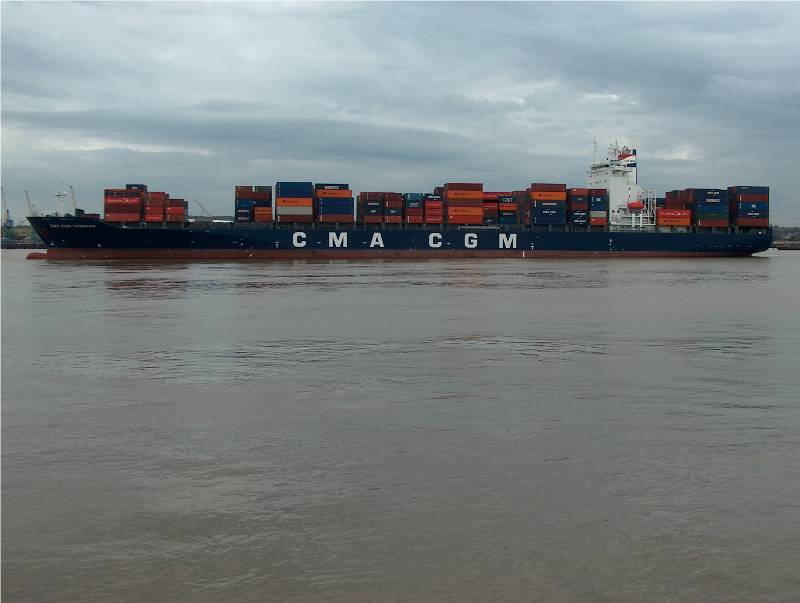
I am reminded of a conversation I had with a good friend of mine as we sat along the Thames watching tugboats push heavy crates of cargo up and down the river. He mentioned that he really enjoyed watching this happen because it reminded him that this is what trade ultimately comes down to: moving boxes from one place to another. Internationl transactions now involve complex derivatives, currency hedges and whatnot, but at the end of the day 77% of global trade is the result of ships moving boxes from one place to another.
This is why it should be particularly worrying that the credit crunch has moved from threatening the jobs of investment bankers to threatening the jobs of shipping and dock workers. The Baltic Dry Index, which measures freight rates for bulk goods, has dropped 96% since May - an incredible display of volatility. Granted, it appears to be a pretty volatile index to begin with and we're currently not far off from pre-2003 levels. But export-oriented economies are hurting badly, particularly the East Asian tigers that are still licking wounds from their own financial crisis a decade ago.
In addition to the costs felt by workers and firms, new ship-building orders are being cancelled regularly. That will dampen the ability of shipping companies to meet demand when it resumes again - clearly an unhappy prospect.
However, some possible good news yesterday coming from the WSJ blog: a recent bump in the Index. FT Alphaville notes that this could be a side-effect of optimism about Obama's expected stimulus package and speculates about some other industries that may benefit as well. But with the medium-term prospects of shipping being what they are, can we expect this uptick to last?


